


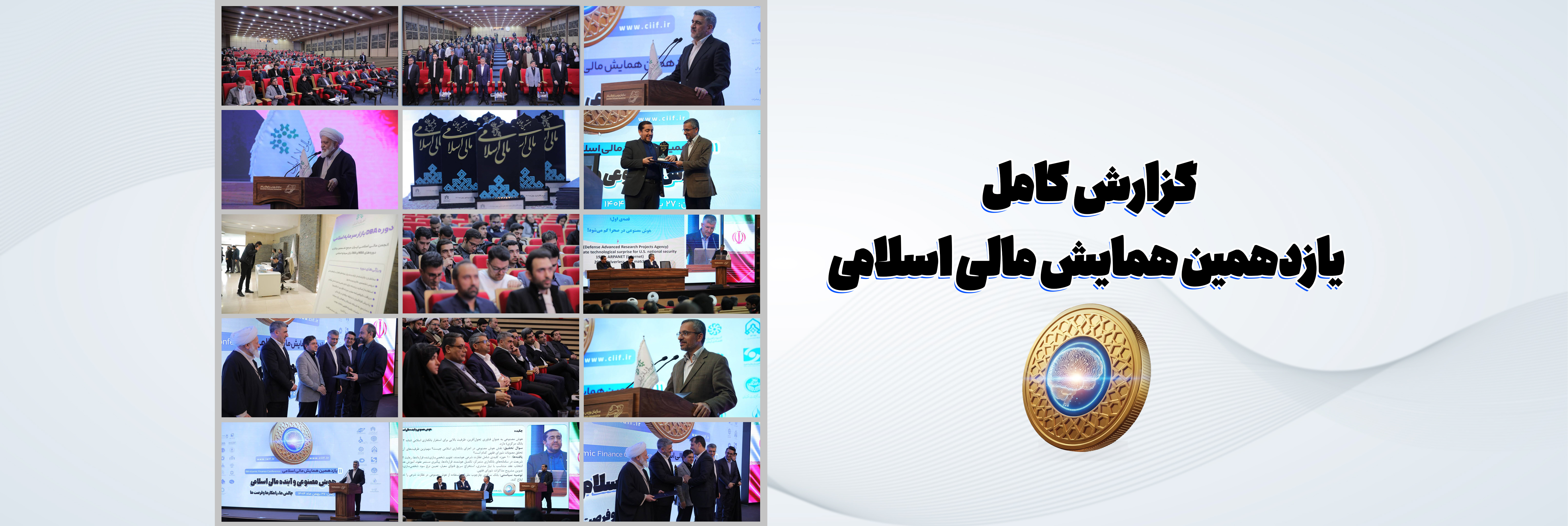
On February 15, 2025, the Iranian Association of Islamic Finance (IAIF) held its 11th Islamic Finance Conference. The event, themed "Artificial Intelligence and the Future of Islamic Finance," brought together leading scholars, policymakers, and market regulators to dissect the profound implications of artificial intelligence (AI) on a financial system rooted in centuries-old Sharia principles.
The Inevitable March of Technology
Dr. Ali Salehabadi, Head of the Iranian Association of Islamic Finance (IAIF), set the tone by framing AI not as a futuristic option but as a present-day reality. He stated emphatically that AI is "redefining the infrastructure of financial systems," shifting the conversation from "whether to move" towards it to "how to guide artificial intelligence along the path of Sharia and economic justice." This sentiment was echoed by Dr. Mehran Mohammadian, Advisor to the Governor of the Central Bank of Iran, who warned of the "breathtaking" pace of change. He likened our current understanding of AI to seeing only "the tip of the iceberg," cautioning that ignoring this technological wave could expose organizations and nations to "heavy losses." Drawing parallels with the internet's evolution from a military project to a global necessity, he stressed that we are approaching a "singularity point" where the line between human and machine output is rapidly blurring, fundamentally altering governance and decision-making.
Real Assets and Resilience: The Bedrock of Iran's Capital Market
Amidst the discussions on futuristic technology, Hojjatollah Seidi, Head of the Securities and Exchange Organization (SEO), grounded the conversation in the present strengths of Iran's Islamic capital market. He highlighted its "acceptable resilience" in the face of systemic risks, political uncertainties, and economic challenges like inflation and budget deficits. A key factor underpinning this stability, he argued, is the market's reliance on real assets. This characteristic, he noted, is a major advantage of an Islamic financial system, as it anchors the market in tangible value, preventing unrealistic, bubble-like fluctuations and ensuring that risks are logically distributed.
Seidi also praised the evolution of Islamic finance itself. He observed a shift from a purely "compliance-based" approach merely avoiding Sharia red lines towards a more robust, principle-based framework centered on concepts like trust, sustainability, and resilience. This intellectual maturity, he suggested, allows the industry to engage with complex new technologies from a position of strength. He credited the dynamism of Shia jurisprudence, as applied by the SEO's Shariah Committee, for enabling the development of advanced financial instruments that are both innovative and Sharia-compliant, preventing deadlock when faced with novel challenges.
The Macroeconomic Landscape: Budgets, Inflation, and Public Participation
The conference also addressed the pressing macroeconomic realities within which this technological evolution is unfolding. Gholamreza Mesbahi Moghaddam, Head of the Shariah Committee of the SEO and a member of the Expediency Discernment Council, delivered a stark analysis of Iran's economic challenges. He identified the persistent budget deficit as the root cause of the nation's inflation rate, which has remained above 45% in recent years. He argued that sustainable inflation control is impossible without establishing a balance between government resources and expenditures.
In this context, he viewed the government's presentation of a contractionary budget as a necessary, albeit difficult, step. While acknowledging the short-term social pressures this creates—such as limited salary increases for employees—he asserted it is crucial for strengthening the outlook for reducing inflation. To achieve the ambitious 8% economic growth target set in the Seventh Development Plan, Mesbahi Moghaddam stressed the unavoidable necessity of people's participation in investment, as government capacities alone are insufficient.
He pointed to two significant tools for mobilizing public capital and curbing inflation. First, he introduced Gold Certificates as an effective anti-inflationary tool, capable of absorbing idle liquidity from the market while simultaneously preserving the value of people's assets. Second, he proposed the launch of currency funds to channel an estimated $70 billion in household foreign currency and gold held by the public into the formal economy and productive activities. This, he argued, could unlock a massive, neglected capacity to fuel economic growth.
Artificial Intelligence: From Concept to Application in Islamic Banking
Moving from the macro to the specific, several speakers delved into the practical applications of AI within Islamic banking and finance. Dr. Hossein Meysami, a faculty member of the Monetary and Banking Research Institute and Secretary of the Sharia Council of the Central Bank, presented a research paper on "The Role of Artificial Intelligence in Establishing Islamic Banking." He emphasized that jurisprudence and law often lag behind technology, and a failure to embrace AI now would mean the banking system not only misses out on its advantages but also bears its costs.
Dr. Meysami outlined several key areas where AI can revolutionize the sector. The most critical was intelligent Sharia supervision and compliance. He proposed that AI could act as an "intelligent Sharia supervision assistant" to support human supervisors, ensuring the effective implementation of the Sharia governance framework across all banking operations. Another transformative application lies in intelligent explanation of contracts. He criticized current practices where clients often lack sufficient awareness of the contracts they sign, arguing that AI can personalize the explanation of contracts to ensure the "real intention of the parties" is fulfilled, thereby preventing the formation of fictitious contracts that may violate Sharia. Other applications included using AI for reforming systemic bank processes to properly implement Sharia Council resolutions, moving towards the standardization of Islamic banking based on international standards, providing personalized training, assisting in the complex task of extracting criterion fatwas, and enabling personalized profit rates to end the current system of uniformity.
The Regulatory Challenge: Ensuring Justice in the Age of Algorithms
The transformative potential of AI brings with it a host of regulatory and ethical challenges, a theme that was central to the discussions. Dr. Hossein Fahimi, a board member of the IAIF, stressed that AI is not merely a technological issue but one tied to human responsibility, economic justice, and the future of financial markets. Drawing from the global financial crisis of 2008 and recent volatility in Iran's market, he warned that without effective supervision, the damage from AI-driven market activity could be widespread.
The solution, he argued, is not to resist AI but to develop precise, comprehensive, and forward-looking regulation. This "intelligent regulation" would not hinder development but rather encourage the healthy use of AI, enhance transparency, and protect investors. He called upon market participants themselves to draft suitable AI laws, rather than waiting for imported legislation. On the question of legal liability for AI's actions, he noted that while clear laws are absent, principles of Islamic jurisprudence such as 'Itlaf' (causing loss) and 'No Harm’ can be used to define responsibility among designers, owners, and users.
Dr. Mehdi Nouri, Head of the Institute for Economic Research and Development at the University of Tehran, reinforced this message, stating that new technologies have created a new paradigm, compelling regulatory bodies to abandon traditional views. He highlighted AI's vast applications—from algorithmic trading and fraud detection to risk management—but also warned of significant risks like privacy violation and increased market volatility. For the regulatory body, this necessitates a shift towards intelligent, agile, and data-driven supervision. He pointed to the underutilized potential of regulatory sandboxes as testing environments for both regulators and the private sector to learn and adapt. He concluded that while new technologies are not a threat in themselves, "delay and procrastination in regulation can deprive the country of the significant benefits of these developments."
Celebrating Excellence: The 11th Islamic Finance Awards
The conference concluded by honoring outstanding contributions to the field of Islamic finance. The "Top Islamic Finance Institution of the Year 1404 (2025)" award, along with the prestigious Dr. Mousavian award, was presented to the Iran Mercantile Exchange, recognized for its pivotal role in developing financial instruments and linking the capital market with the real economy.
Gholamreza Mesbahi Moghaddam was awarded the "Top Islamic Finance Book" prize for his work, "Jurisprudence of the Capital Market." In the research category, Mohammad Ali Torabi and Alireza Ghodrati were honored for their dissertations on inside information in the capital market and the effects of leveraged funds, respectively. The "Top Master's Thesis" awards went to Meysam Akbari and Mohammad Rahimi for their research on non-governmental banks and market maker mechanisms. Finally, "Top Conference Articles" were awarded to authors exploring the transition to intelligent supervision and the pathology of bias in AI data within Islamic finance studies. Majid Pouyanmehr was introduced as the "Top Individual in the Field of Islamic Finance," receiving the 7th Dr. Abbas Mousavian Award.